What is an Eclipse? ― A Comprehensive Q&A
Eclipses, both solar and lunar, fascinate observers, prompting many questions! Resources like downloadable Eclipse MCQ PDF e-books aid learning for students, specifically Class 7 Science.
Defining Solar and Lunar Eclipses
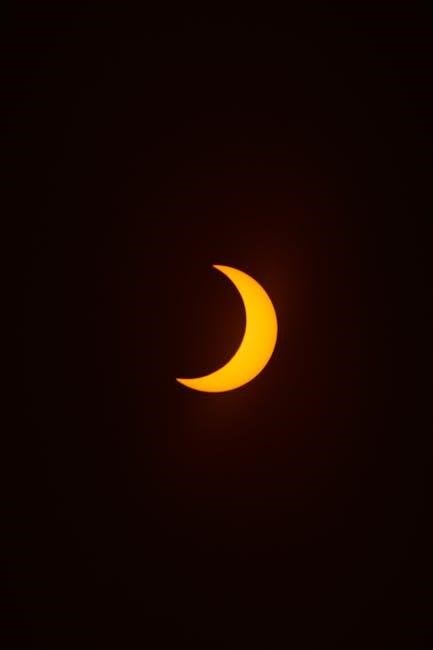
Solar eclipses occur when the Moon passes directly between the Sun and Earth, casting a shadow upon our planet and momentarily blocking the Sun’s light. Conversely, a lunar eclipse happens when the Earth positions itself between the Sun and Moon, enveloping the Moon within Earth’s shadow.
A key difference lies in visibility; because the Moon is significantly smaller than Earth, its shadow during a solar eclipse covers a relatively small area. However, during a lunar eclipse, the entire Moon can be immersed in Earth’s shadow, making lunar eclipses visible to a much wider audience.
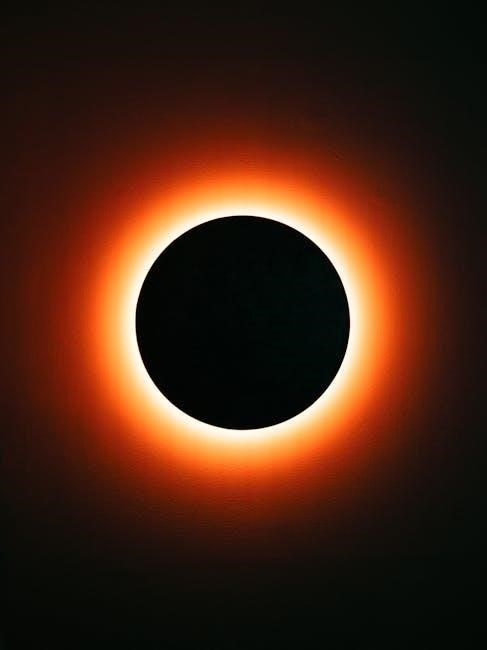
Both types of eclipses can manifest as either partial or total events. Understanding these fundamental definitions is crucial when exploring resources like Eclipse MCQ PDF materials designed for educational purposes, such as those for Class 7 Science students, to test their knowledge of these celestial phenomena.
How Do Eclipses Occur? ― The Alignment of Sun, Earth, and Moon
Eclipses are spectacular displays resulting from a precise alignment of the Sun, Earth, and Moon. A solar eclipse demands the Moon to position itself directly between the Sun and Earth, blocking the Sun’s light. A lunar eclipse requires Earth to interpose itself between the Sun and Moon, casting a shadow on the lunar surface.
This alignment isn’t random; it’s governed by the orbital paths of these celestial bodies. The Moon’s orbit is slightly tilted relative to Earth’s orbit around the Sun, meaning eclipses don’t happen every month. When the alignment is perfect, however, the resulting eclipse can be a breathtaking sight.
Studying these alignments is often reinforced through educational materials, such as Eclipse MCQ PDF resources, frequently used in Class 7 Science curricula. These materials help students grasp the mechanics behind these cosmic events and test their understanding of the necessary conditions for eclipse occurrence.
Why are Lunar Eclipses More Widely Visible?
Lunar eclipses are observable from a much broader area of Earth compared to solar eclipses due to the size difference and shadow projection. The Moon, being significantly smaller than Earth, casts a shadow that can fully encompass the entire lunar surface during a lunar eclipse. Conversely, the Moon’s shadow during a solar eclipse is relatively small, covering only a limited portion of Earth.
This means that anyone on the nighttime side of Earth during a lunar eclipse can potentially witness the event, provided weather conditions permit. Solar eclipses, however, are only visible along a narrow path of totality or partiality.
Understanding this difference is often a key component of astronomy education, frequently assessed through resources like Eclipse MCQ PDF study guides. These materials, often used in Class 7 Science, help students differentiate between the visibility ranges of these fascinating celestial phenomena.
Types of Solar Eclipses
Solar eclipses manifest in diverse forms: total, partial, and annular. Studying these variations is crucial, often tested via Eclipse MCQ PDF resources for science education.
Total Solar Eclipse ― Complete Sun Blockage
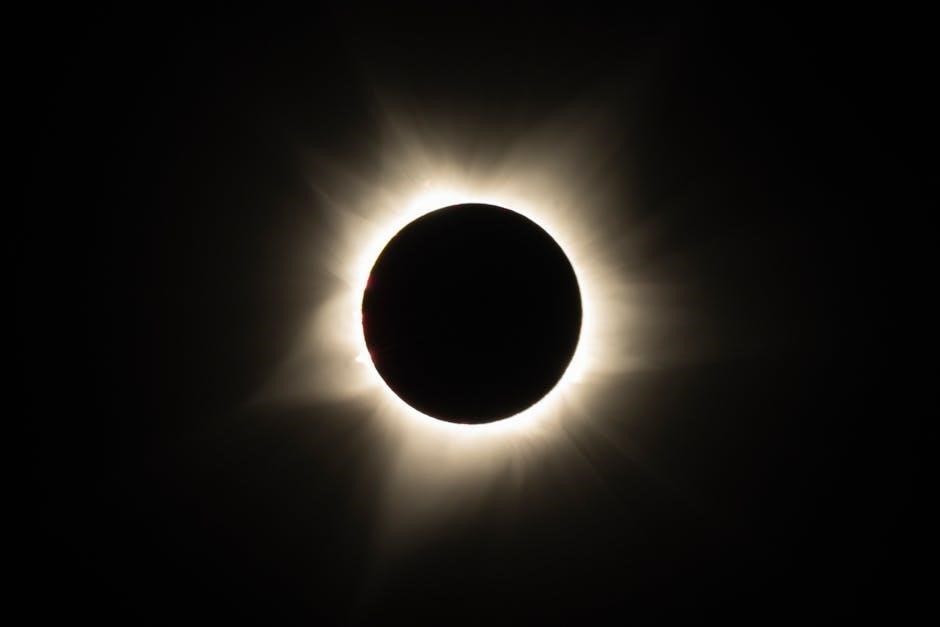
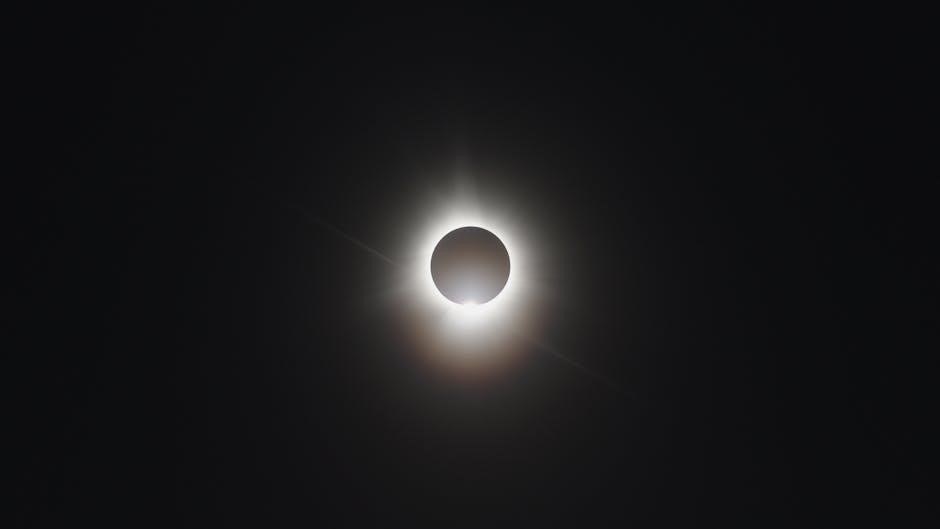
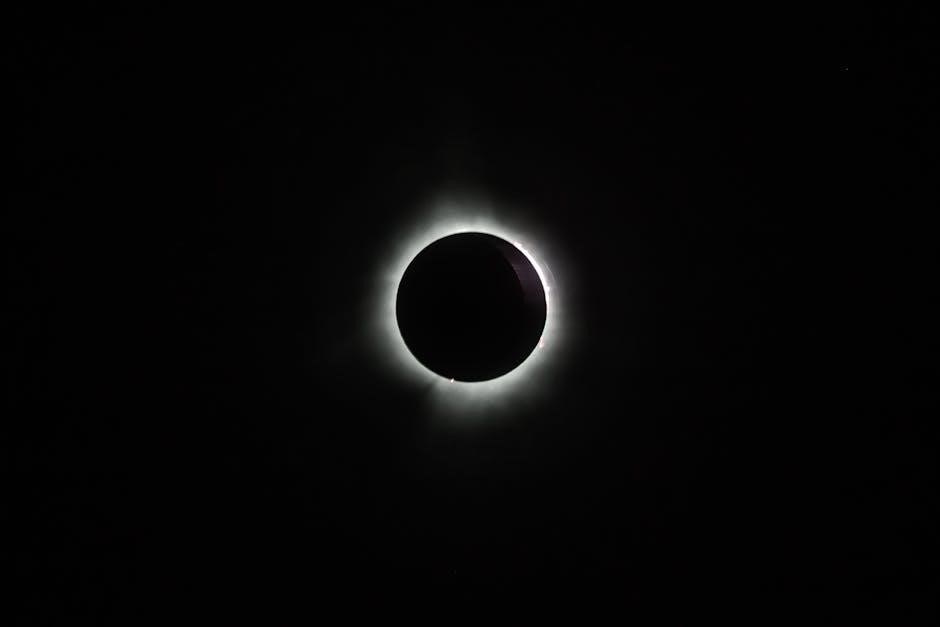
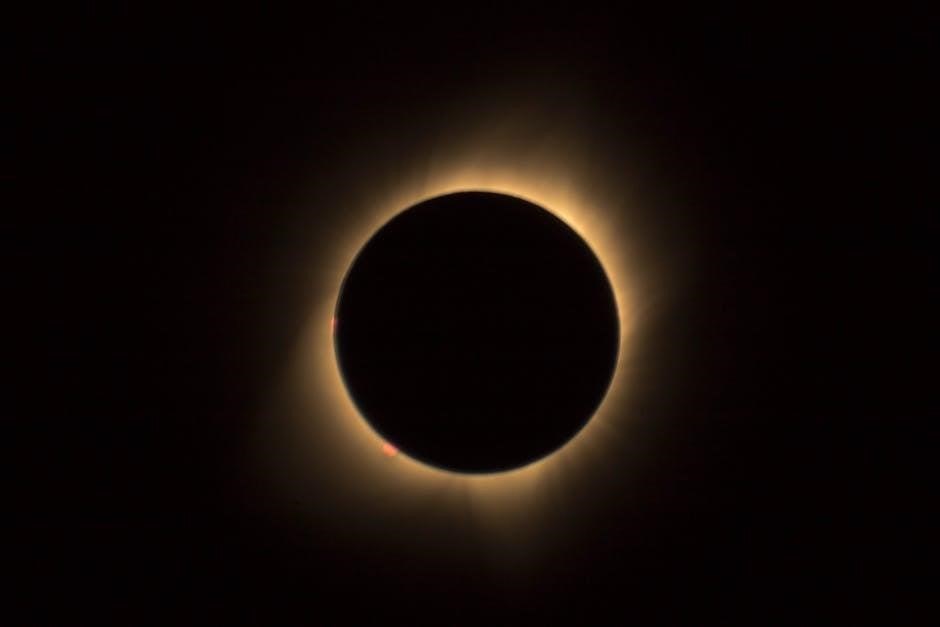
A total solar eclipse is a breathtaking spectacle, occurring when the Moon perfectly aligns between the Sun and Earth, entirely obscuring the Sun’s face. This alignment casts a shadow, creating a temporary darkness resembling dawn or dusk. Understanding this phenomenon is often a focus in science education, with resources like Eclipse MCQ PDF materials designed to test comprehension.
These quizzes frequently assess knowledge of the alignment process and the resulting effects. The duration of totality – the period of complete blockage – varies depending on location, with some areas experiencing up to 4 minutes and 24 seconds, as seen in southwestern Texas during the 2024 eclipse. The closer one is to the centerline of the path of totality, the longer the eclipse lasts. Eclipse MCQ PDF questions often explore these geographical variations and timing aspects.
Such resources help students grasp the rarity and significance of total solar eclipses, reinforcing concepts related to the solar system and celestial mechanics.
Partial Solar Eclipse ⎯ Sun Partially Obscured
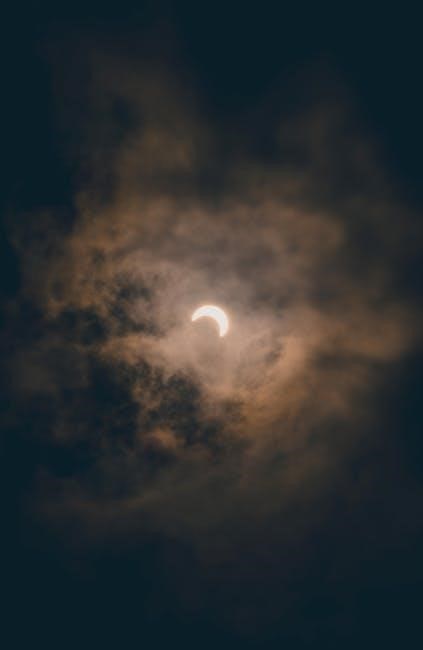
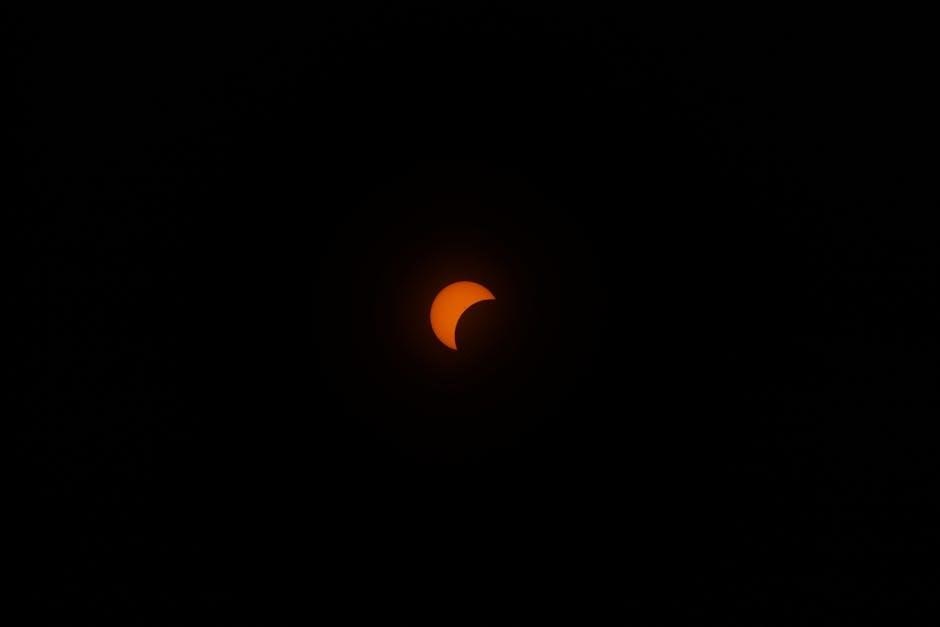
A partial solar eclipse happens when the Moon passes between the Sun and Earth, but doesn’t completely cover the Sun. This results in the Sun appearing as if a dark circle has taken a “bite” out of it. While less dramatic than a total eclipse, it’s far more common and visible from a wider area. Educational materials, such as Eclipse MCQ PDF study guides, often include questions differentiating between partial and total eclipses.
These quizzes frequently test understanding of the varying degrees of sun coverage and the resulting light levels. Unlike total eclipses confined to a narrow path, partial eclipses can be observed across a much broader geographical region. Eclipse MCQ PDF questions may also assess knowledge of safe viewing practices during a partial eclipse, emphasizing the need for proper eye protection.
Understanding partial eclipses is crucial for appreciating the full spectrum of solar eclipse phenomena and reinforces core astronomical concepts.
Annular Solar Eclipse ― The “Ring of Fire”
An annular solar eclipse occurs when the Moon passes between the Sun and Earth, but the Moon is too far from Earth to completely cover the Sun. This creates a stunning “ring of fire” effect, where a bright ring of sunlight surrounds the dark disk of the Moon. Eclipse MCQ PDF resources frequently dedicate sections to distinguishing annular eclipses from total and partial events.
These quizzes often test comprehension of the Moon’s orbital path and its impact on eclipse types. Questions may explore why the Moon appears smaller during an annular eclipse, relating it to its distance from Earth. Eclipse MCQ PDF materials also emphasize that, like all solar eclipses, proper eye protection is essential during an annular eclipse.
The unique visual spectacle of the “ring of fire” makes annular eclipses particularly captivating and a common focus in astronomy education.
Understanding the Path of Totality
Eclipse MCQ PDF study guides detail the path of totality, where the Moon completely blocks the Sun, and duration depends on location within this path.
What is the Path of Totality?
The path of totality represents the narrow route on Earth’s surface where a total solar eclipse is fully visible. This isn’t a broad area; the Moon’s shadow is relatively small compared to Earth. Studying Eclipse MCQ PDF materials clarifies that locations within this path experience complete darkness, akin to dawn or dusk, as the Sun is entirely obscured by the Moon.
Conversely, areas outside this path only witness a partial eclipse. Resources like downloadable quizzes, such as the Eclipse MCQ, emphasize that the centerline of the path offers the longest duration of totality. For instance, southwestern Texas towns may experience over four minutes of complete sun blockage during the 2024 eclipse. Understanding this path is crucial for eclipse chasers and educators utilizing resources like Eclipse MCQ PDF e-books to teach about this rare astronomical event.
Duration of Totality ⎯ Location Matters
The length of time the Sun is completely blocked during a total solar eclipse – the duration of totality – is heavily dependent on your precise location. As highlighted in Eclipse MCQ PDF study guides, the closer you are to the centerline of the path of totality, the longer the eclipse will last. Even slight deviations from this centerline can significantly reduce the viewing time.
For example, certain towns in southwestern Texas are predicted to experience up to 4 minutes and 24 seconds of totality during the 2024 event. Educational resources, including Eclipse MCQ quizzes, reinforce this concept. Understanding this geographical nuance is vital; practicing with Eclipse MCQ PDF questions helps solidify the knowledge that totality isn’t a uniform experience. Therefore, strategic positioning is key for maximizing the eclipse viewing duration, a point often tested in Eclipse MCQ assessments.
Indiana and the 2024 Eclipse ― Regional Visibility
Indiana residents are poised to witness a significant portion of the 2024 total solar eclipse, though the experience will vary across the state. While all of Indiana will experience some degree of the eclipse, a specific section lies within the coveted Path of Totality – the area where the Moon will completely obscure the Sun. Studying Eclipse MCQ PDF materials emphasizes the importance of location for a full totality experience.
Resources like Eclipse MCQ quizzes often test understanding of regional visibility. This means that those within the path will see the dramatic darkening of the sky, while those outside will observe a partial eclipse. Preparing with Eclipse MCQ PDF questions can help residents determine their viewing prospects. Understanding the path’s trajectory across Indiana is crucial, and Eclipse MCQ assessments frequently focus on this geographical aspect, reinforcing the concept of varied visibility.
Eclipse Safety
Protecting your eyes is paramount during an eclipse! Eclipse MCQ PDF resources highlight safe viewing practices, emphasizing the absolute necessity of specialized eclipse glasses.
Safe Viewing Practices ⎯ Protecting Your Eyes
Directly viewing the sun, even during an eclipse, is incredibly dangerous and can cause serious, permanent eye damage – even blindness. Never look at the sun without proper eye protection! Regular sunglasses, no matter how dark, are not sufficient for safe solar viewing.
Dedicated eclipse glasses, compliant with the ISO 12312-2 international safety standard, are essential. These glasses block out almost all of the sun’s harmful rays. Before using them, inspect the glasses for any scratches or damage. If damaged, discard them.
Another safe viewing method is pinhole projection. This involves creating a small hole in a piece of cardboard and projecting an image of the sun onto another surface. Resources like Eclipse MCQ PDF materials often detail this technique. Remember, never look at the sun through the pinhole!
Supervise children closely during an eclipse to ensure they are using proper eye protection. Understanding these safety measures, often covered in educational PDFs, is crucial for a memorable and safe eclipse experience.
Eclipse Glasses ― Essential Protection
Eclipse glasses are paramount for safely observing a solar eclipse, acting as your primary defense against the sun’s intense rays. These aren’t your typical sunglasses; they’re thousands of times darker and designed specifically for solar viewing, adhering to the ISO 12312-2 international safety standard.
Before each use, meticulously inspect your eclipse glasses for any scratches, pinholes, or damage. Even minor imperfections can compromise their protective capabilities. If damage is detected, immediately discard them and obtain a new pair.
Reputable vendors are key. Counterfeit eclipse glasses lacking proper filtration are a serious concern. Purchasing from trusted sources, often listed by organizations like NASA, is vital. Educational resources, including Eclipse MCQ PDF guides, frequently emphasize this point.
Remember, if you experience any discomfort or vision changes after viewing the eclipse, consult an eye care professional immediately. Prioritizing eye safety with certified glasses ensures a rewarding eclipse experience.
Eclipse FAQs ― Common Questions Answered
Frequently asked questions about eclipses are readily available, often compiled in resources like Eclipse MCQ PDFs, addressing queries about visibility and safety concerns.
Can Solar Eclipses Be Seen From the Moon?
This is a compelling question often found within Eclipse FAQs and addressed in resources like Eclipse MCQ PDFs. The answer is a nuanced one, requiring understanding of what constitutes a solar eclipse. A solar eclipse, as we experience it, is the Moon passing between the Sun and Earth, blocking the Sun’s light.
From the Moon’s surface, however, Earth would appear much larger in the sky than the Sun. Therefore, what a lunar observer would witness isn’t a blocking of the Sun by the Moon, but rather the Earth passing in front of the Sun. This event would appear as a much larger, dark disk (Earth) obscuring the Sun.
Essentially, it’s a lunar eclipse from the Moon’s perspective, not a solar eclipse. The concept shifts depending on the observer’s location. Studying Eclipse MCQs helps clarify these perspective-dependent phenomena, solidifying understanding of celestial mechanics.
Historical Records of Eclipses ― First Video Recording
Throughout history, eclipses have been meticulously recorded, initially through written observations and later, with technological advancements, through visual media. Finding answers to such historical eclipse questions is often included in comprehensive Eclipse FAQs and study materials like Eclipse MCQ PDFs.
The first known video recording of a total solar eclipse occurred during the event of May 29, 1919. This eclipse was particularly significant as it was used by Arthur Eddington to confirm Albert Einstein’s theory of general relativity. The expedition, led by Eddington, captured footage of the eclipse’s corona, providing crucial evidence.
This early video, though rudimentary by today’s standards, represents a pivotal moment in both astronomical observation and the history of filmmaking. It demonstrates humanity’s enduring fascination with eclipses and our continuous efforts to understand these spectacular celestial events. Exploring such milestones is often part of Eclipse MCQ quizzes.
Eclipse MCQ ― Testing Your Knowledge (Class 7 Science)
For students studying the solar system, particularly in Class 7 Science, Eclipse Multiple Choice Questions (MCQ) provide an excellent method for assessing comprehension. Downloadable Eclipse MCQ PDF e-books offer a convenient resource for self-study and exam preparation, covering fundamental concepts related to eclipses.
These quizzes typically explore topics such as the alignment of the Sun, Earth, and Moon, the differences between solar and lunar eclipses, and the various types of solar eclipses – total, partial, and annular. Questions often focus on understanding the path of totality and safe viewing practices.
Eclipse quiz answers PDF formats allow students to check their understanding immediately. Mastering these concepts is crucial for building a strong foundation in astronomy. Utilizing these resources alongside broader eclipse questions and answers materials ensures a thorough grasp of the subject matter.
The 2024 Total Solar Eclipse ― Date and Significance
The highly anticipated 2024 total solar eclipse will occur on Monday, April 8th, presenting a rare astronomical spectacle. This event holds significant scientific and cultural importance, drawing attention from across the globe. Many are seeking resources to understand this phenomenon, including comprehensive eclipse questions and answers.
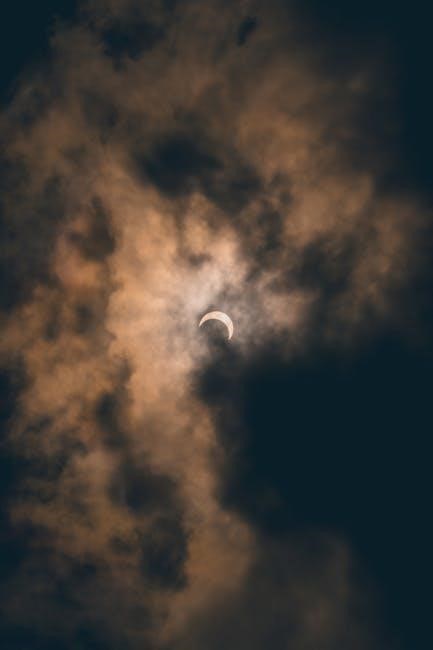
For those preparing to learn more, Eclipse MCQ PDF materials can aid in understanding the eclipse’s mechanics. The eclipse will plunge parts of North America into darkness for several minutes, offering unique opportunities for research and observation. Southwestern Texas will experience up to 4 minutes and 24 seconds of totality.
Understanding the eclipse’s path and duration is key, and resources like downloadable quizzes help solidify knowledge. This eclipse is a reminder of the dynamic interplay between the Sun, Earth, and Moon, prompting further exploration through eclipse questions and answers.
How Does the Moon’s Size Affect Eclipse Shadows?
The Moon’s comparatively small size relative to Earth is crucial in determining the nature of eclipse shadows. Because the Moon is significantly smaller, the shadow it casts during a solar eclipse covers only a limited area on Earth’s surface. This explains why total solar eclipses aren’t visible from everywhere.
Conversely, during a lunar eclipse, Earth’s shadow can completely envelop the Moon, making lunar eclipses more widely visible. Resources offering eclipse questions and answers often highlight this size difference. Studying Eclipse MCQ PDF materials can further clarify this concept.
The size also impacts the duration of totality; locations closer to the centerline of the path experience longer eclipses. Understanding these shadow dynamics is fundamental to appreciating the complexities of eclipses, and readily available through detailed eclipse questions and answers.
What Happens During a Total Solar Eclipse? ⎯ Sky Darkening
During a total solar eclipse, a remarkable transformation occurs as the Moon completely blocks the Sun’s face. The sky dramatically darkens, resembling dawn or dusk in the middle of the day. This isn’t a gradual dimming, but a noticeable shift in ambient light, often accompanied by a drop in temperature.
This phenomenon is a key focus in many eclipse questions and answers resources, including downloadable Eclipse MCQ PDF study guides. These materials explain how the sudden darkness allows stars and planets to become visible, creating an otherworldly spectacle.
Understanding the sequence of events – from the initial partial phase to totality and then back again – is crucial. Exploring eclipse questions and answers helps demystify this awe-inspiring event, providing insights into the celestial mechanics at play during a total solar eclipse.
